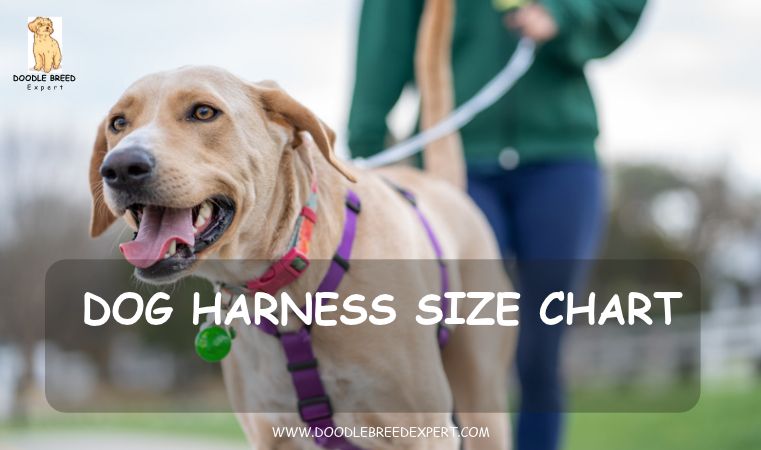
Most returns are due to sizing based on weight. Two dogs may both weigh 40 lbs., but they could each have very different chests, and that is what a harness needs to fit. The Dog Harness Size Calculator works with chest circumference (first) and then uses neck and weight to alert you if your dog falls in-between sizes.
You will just need a flexible tape and some of your dog’s favorite treats for this. Once completed, you should have an answer within a few minutes.
Dog Harness Size Calculator
Chest girth is the most important number. Measure around the widest part of the ribcage, just behind the front legs.
How to Measure Your Dog for a Harness
There are only three things needed for this measurement; two measurements and weight as backup. For measuring, have your dog stand square on all four feet. Sitting changes the measurement.
- Chest girth: wrap the tape around the deepest part of the chest, just behind the front legs. This is the key measurement for almost every harness.
- Neck: measure around the base of the neck, lower down than a collar would sit, where the neck meets the shoulders.
- Weight: useful for cross-checking, but don’t size on weight alone.
On long coated breeds such as Doodles, push the tape through the hair until it lies flat against the dog’s skin, and then add approximately .5 inches. Measuring over the fluff makes the harness too big, and a big harness is easy to back out of.
Dog Harness Size Chart
| Size | Chest girth | Neck | Typical weight | Example breeds |
| XXS | 9-13 in (23-33 cm) | 7-10 in | Under 5 lb | Teacup breeds, small Chihuahua puppies |
| XS | 13-18 in (33-46 cm) | 8-12 in | 5-10 lb | Chihuahua, Yorkie, Toy Maltipoo |
| S | 17-22 in (43-56 cm) | 10-14 in | 10-25 lb | Cavapoo, Shih Tzu, Mini Schnoodle, French Bulldog |
| M | 21-28 in (53-71 cm) | 14-20 in | 25-50 lb | Beagle, Cocker Spaniel, Mini and Medium Doodles |
| L | 27-34 in (69-86 cm) | 18-26 in | 50-80 lb | Labrador, Golden Retriever, Standard Goldendoodle |
| XL | 33-42 in (84-107 cm) | 22-30 in | 80-110 lb | German Shepherd, Standard Bernedoodle |
| XXL | 40-50 in (102-127 cm) | 26-36 in | 110 lb + | Great Dane, Newfoundland, Mastiff |
These size ranges are based on typical pet manufacturers’ measurements. Each manufacturer will measure their products slightly differently, therefore please consider this information to be an example of how you can determine what size your pet may need, but please consult each individual product for proper measurement prior to purchase.
How Should a Dog Harness Fit?
- Two-finger rule: you should fit two flat fingers under every strap, no more
- Not in the armpits: the strap behind the front legs should sit about a hand’s width back from the elbows, so it doesn’t rub
- Shoulders free: the front strap should sit on the breastbone, not across the shoulder joints. Straps that cross the shoulders restrict movement.
- No escape: gently pull the harness forward and backward. Your dog shouldn’t be able to slide out.
In addition, check for rubbing under the front leg(s) within the first seven (7) days of wearing a new harness. If your pet has red skin, patches of missing hair or does not want to put on a particular harness, these could indicate improper fit.
Choosing a Harness Type
| Harness type | Best for | Notes |
| Back-clip | Calm walkers, small dogs | Comfortable, but can encourage pulling |
| Front-clip | Dogs that pull | Lead clips on the chest and turns the dog towards you |
| Dual-clip | Training, strong dogs | Use both clips with a double-ended lead for the most control |
| Step-in | Dogs that hate things over their head | Can be easier to wriggle out of |
| Y-front | Active dogs, hiking | Leaves shoulders free to move naturally |
| Vest harness | Tiny and flat-faced breeds | Spreads pressure over a larger area |
Additionally, tightening harnesses that apply pressure across the chest when the dog pulls are not something we would suggest. In contrast, a properly fitting front clip harness combined with loose lead training, is often more effective and gentler than using a no pull harness that applies pressure to the chest.
Harness or Collar?
A harness takes pressure off the neck and windpipe, which matters a lot for some dogs. It’s the better choice for:
- Flat-faced breeds like Pugs, French Bulldogs and Shih Tzus
- Toy breeds prone to tracheal collapse, such as Yorkies and Maltipoos
- Dogs that pull hard
- Dogs with neck, back or eye problems
- Puppies learning to walk on a lead
Your dog still needs a collar or tag for ID. See our dog collar size chart for that.
Harness Sizing for Puppies
Puppies can go up a harness size every few weeks during growth spurts. Pick an adjustable harness with at least four adjustment points, start in the middle of the range, and re-check the fit weekly. Expensive harnesses can wait until your puppy is close to adult size. Not sure when that will be? Try our puppy weight calculator.
Frequently Asked Questions
Measure the chest girth around the widest part of the ribcage, just behind the front legs, with your dog standing. Measure the base of the neck too.
Use chest girth: roughly XS for 13-18 in, S for 17-22 in, M for 21-28 in, L for 27-34 in and XL for 33-42 in. Check the brand’s own chart as well.
Mini Goldendoodles usually take a medium, Mediums a medium or large, and Standards a large harness.
Size up for fluffy or growing dogs, and down for slim, short-coated dogs, then adjust the straps.
Snug enough that your dog can’t back out, but loose enough to fit two flat fingers under each strap.
For most dogs that pull, small breeds and flat-faced breeds, yes. It keeps pressure off the throat.
Yes. A light, adjustable harness is ideal for puppies learning to walk on a lead. Check the fit weekly as they grow.
A front-clip or dual-clip harness that leaves the shoulders free, combined with loose-lead training.
It’s best to take it off when your dog is resting at home to prevent rubbing and matting, especially in long-coated breeds.
Vet note: Written and reviewed by Dr. Muhammad Usman, DVM. If your dog coughs, gags or honks on walks, use a harness and ask your vet to check for tracheal problems.
More tools: Dog Collar Size Chart · Puppy Clothes Size Chart · Dog Crate Sizes