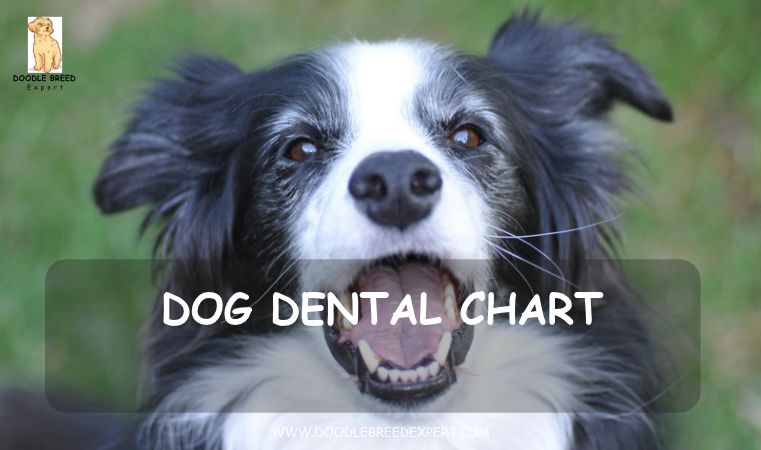
Many pet owners are surprised to learn that adult dogs have 42 teeth while their pups have just 28. Pet owners generally do not notice the other (back) teeth as they normally view only the front teeth. This Dog Dental Chart lists each tooth with both a name and number, describes when puppy (primary) teeth fall out and adult (permanent) teeth erupt into the mouth and lists common dental health problems to check for at home.
To begin with, use the Teething Checker below. Simply enter your dog’s age and it will tell you which teeth should currently be in your pup’s mouth along with some of the issues you may want to monitor.
Dog Teeth Age Checker
See which teeth your puppy or dog should have at their age.
How Many Teeth Do Dogs Have?
| Puppy (deciduous) | Adult (permanent) | |
| Total | 28 | 42 |
| Incisors | 12 | 12 |
| Canines | 4 | 4 |
| Premolars | 12 | 16 |
| Molars | 0 | 10 |
| Upper jaw | 14 | 20 |
| Lower jaw | 14 | 22 |
The most significant difference lies at the rear of the mouth. Unlike adult dogs, puppies have no molars; and, in addition, each “quarter” of the jaw has one fewer primary premolar than does its adult counterpart. Also, the lower jaw includes one additional permanent molar on each side than the upper jaw, and therefore, adult dogs have 22 teeth on the bottom jaw and 20 on top.
Dog Dental Chart With Tooth Numbers (Triadan System)
Veterinarians commonly use a modified version of the Triadan system to label a dog’s teeth. If you have ever looked at a dental report and wondered what those numbers like “108” meant – this is where it begins. The first number represents the area of the mouth (quarter), and the last two represent the position of the tooth in that quadrant (position).
| First digit | Quarter of the mouth |
| 1 | Upper right (adult) |
| 2 | Upper left (adult) |
| 3 | Lower left (adult) |
| 4 | Lower right (adult) |
| 5-8 | Same quarters, but for puppy teeth |
| Last two digits | Tooth | Notes |
| 01-03 | Incisors | Small front teeth for nibbling and grooming |
| 04 | Canine | Long fang. Upper canine roots are much longer than the visible crown. |
| 05-08 | Premolars 1-4 | Upper 4th premolar (108 / 208) is the big upper carnassial tooth |
| 09-10 | Molars 1-2 (upper) | Upper jaw has two molars per side |
| 09-11 | Molars 1-3 (lower) | Lower 1st molar (309 / 409) is the lower carnassial tooth |
So, as an example; 108 refers to the upper right fourth premolar tooth located towards the rear of your dog’s cheek. This tooth is one of the most common to fracture/break and then become abscessed. The fractures/abscesses of the fourth premolar occur commonly due to chewing on bone, antler, etc.
Puppy Teething Timeline
| Age | What’s happening |
| 0-2 weeks | No teeth |
| 3-4 weeks | Baby incisors and canines come in |
| 4-12 weeks | Baby premolars come in. Full set of 28 needle-sharp teeth. |
| 12-16 weeks | Baby incisors fall out, adult incisors come in |
| 4-6 months | Adult canines and premolars come in, adult molars start |
| 6-7 months | Full adult set of 42 should be in place |
The smaller and toy breed puppies will typically take a few additional weeks to lose their baby teeth. These same breed types are also the most prone to retain their baby teeth.
Retained Baby Teeth
On occasion a baby tooth will not fall out prior to the adult tooth coming in. In these cases there will appear to be two teeth in place of the normal single tooth. Usually, a very thin baby canine is positioned immediately anterior or adjacent to the larger adult tooth. This condition is common in Maltese-Poodle hybrids (Maltipoos); Yorkshire Terriers; Chihuahua; Toy Poodle, and miniature Doodle crossbreeds.
It is far from merely aesthetic. Both teeth hold food and plaque, and the baby tooth may displace the adult tooth into an improper position (in some cases, to the point where the lower canine will be biting into the roof of the dog’s mouth). If the baby tooth is remaining intact when the adult tooth erupts fully, most veterinarians suggest removing the baby tooth — typically at the same time as spaying/neutering your pet.
Dog Dental Disease Stages
Most dogs experience some form of periodontal disease by the age of 3. Veterinarians generally assess this condition in one of four degrees:
| Stage | What you’d see | What it means |
| 1 – Gingivitis | Red line along the gums, some bad breath | Reversible with cleaning and brushing |
| 2 – Early periodontitis | Tartar, puffy gums, up to 25% bone loss | Needs professional cleaning under anaesthetic |
| 3 – Moderate periodontitis | Gum recession, heavy tartar, 25-50% bone loss | Some teeth may need extracting |
| 4 – Advanced periodontitis | Loose teeth, pus, receding gums, more than 50% bone loss | Painful. Extractions are usually needed. |
Many dogs are masters of concealing oral pain. In fact, many eat normally while having teeth that would send a person straight to the dentist for immediate relief. Owners frequently do not realize how painful those teeth were until they see the change in their dog after the bad teeth have been removed and their dog starts acting like he did years ago.
How to Check Your Dog’s Teeth at Home
- Lift the lip at the side of the mouth, not just the front. The big back teeth are where trouble usually starts.
- Look for brown or yellow tartar, red gum lines, and any tooth that looks broken, discoloured (pink, purple or grey) or loose.
- Smell the breath. Dog breath isn’t supposed to be terrible. Strong, foul breath usually means infection.
- Watch for chewing on one side, dropping food, pawing at the face or swelling under an eye (often a tooth root abscess).
Keeping Your Dog’s Teeth Healthy
- Brush daily with a dog toothpaste (never human toothpaste, which may contain xylitol). It’s the single best thing you can do.
- Start young. Handle your puppy’s mouth from the first week home so brushing is normal.
- Pick safe chews. If you can’t bend it or dent it with a fingernail, it can break a tooth. Skip antlers, hard bones and nylon bones for strong chewers.
- Look for the VOHC seal on dental chews, diets and water additives. It means the product has evidence behind it.
- Get yearly dental checks, and professional cleanings under anaesthetic when your vet recommends them.
Frequently Asked Questions
Adult dogs have 42 teeth: 12 incisors, 4 canines, 16 premolars and 10 molars. Puppies have 28 baby teeth.
Baby teeth start falling out around 12-16 weeks, and all adult teeth are usually in by 6-7 months.
Often, yes. It’s normal and harmless. You might find a few on the floor or stuck in toys.
It’s the large shearing tooth: the upper 4th premolar (108 and 208) and the lower 1st molar (309 and 409). The upper one often fractures from hard chews.
It’s the upper right fourth premolar, using the Triadan numbering system vets use.
Bad breath, chewing on one side, dropping food, pawing at the mouth, face swelling, drooling or reluctance to play with toys. Many dogs show no obvious signs at all.
Usually, yes, once the adult tooth has come in. They trap plaque and can push adult teeth out of position.
Daily is ideal. Even three times a week makes a real difference to plaque build-up.
They help, especially products with the VOHC seal, but they don’t replace brushing or professional cleaning.
Vet note: Written and reviewed by Dr. Muhammad Usman, DVM. Professional dental cleaning should be done under general anaesthetic so teeth can be cleaned below the gum line and X-rayed. Anaesthesia-free scaling is cosmetic only.
More tools: Dog Years Calculator · Puppy Schedule · Puppy Vaccination Chart