
The Mini Bernedoodle crosses a Bernese Mountain Dog with a Miniature Poodle, aiming for the Bernese’s affectionate, easygoing temperament in a body that actually fits an apartment or a smaller yard. Bred correctly, that’s what you get – but the “mini” label covers a wider size range than most people expect, and coat, shedding, and temperament all shift depending on how many Poodle genes are in the mix. This guide covers what actually varies between generations, what it costs beyond the sticker price, and the health issues worth asking a breeder about directly.
| Parent breeds | Bernese Mountain Dog x Miniature Poodle |
| Weight | 10-50 lbs (varies significantly by generation) |
| Height | 12-22 inches |
| Lifespan | 12-17 years |
| Coat | Curly to wavy, low to very low shedding |
| Origin | First bred by Sherry Rupke, 2003 |
| Registry | International Designer Canine Registry (2009) |
| Energy level | Moderate |
| Good with kids | Yes, generally |
What is a Mini Bernedoodle?
The Miniature Bernedoodle is a sweet little hybrid of a Miniature Poodle and a Bernese Mountain Dog. Combining these two breeds produces a puppy that has inherited all of the wonderful qualities of both breeds.
On average, these Bernedoodle puppies will weigh in the area of 10-50 pounds, and stand approximately 12-22 inches high at the shoulder, making them suitable for virtually any type of home environment (apartments or houses with backyards).
Their coats can be either curly or wavy, and they generally have a black/brown/white color pattern. Since every puppy is different, this gives each one its own unique “look”.
Friendly, fun-loving, and energetic, Miniature Bernedoodles are ideal as family pets, and/or as a pet companion for individuals. If you’re looking for a playful partner to run with or someone to snuggle on the couch, there’s a Miniature Bernedoodle perfect for your lifestyle.
History and Origin of the Mini Bernedoodle
The Bernedoodle as a whole traces to Sherry Rupke of Swissridge Kennels, who is generally credited with first deliberately crossing Bernese Mountain Dogs and Poodles in 2003. The goal was straightforward: keep the Bernese’s temperament while reducing the shedding and grooming intensity that comes with a full double coat. The mini version followed as breeders paired that same cross with Miniature Poodles instead of Standards, aiming for the same temperament in a smaller package. The American Kennel Club still doesn’t recognize the Bernedoodle as its own breed – it’s registered as a designer crossbreed through the International Designer Canine Registry, established in 2009.
The goal of breeding these two breeds was to have a small version of the Standard Bernedoodle that had all of the same characteristics (temperament wise), however, with a much lower shed and be hypoallergenic.
As more people look for dogs that can fit into their busy lifestyle and still want a dog with a great personality and look, the interest in the mini Bernedoodle has grown.
Currently, mini bernedoodles are being praised not only for how they look, but also for how smart they are and how easily trainable they are. With a genetic make-up from both parent breeds, you get a fantastic family pet.
Characteristics and Appearance
A Miniature Bernedoodle is a unique combination of a Bernese Mountain Dog, a Poodle, and a little something of its own special self. They will typically weigh anywhere from 10 to 50 pounds, which ultimately depends on the size of the Toy or Miniature Poodle being bred with it.
One of the best things about this dog is its coat. The Miniature Bernedoodle’s coat has a soft curl/wave texture that can also possess some hypoallergenic qualities because of the Poodle bloodline. Miniature Bernedoodles’ coats can be found in a variety of colors, ranging from bold tri-colored combinations (black, white, and rust) to solid colors (cream/sable).
Their eyes are usually quite large, expressive, and full of warmth and intelligence. Their ears are usually hanging/floppy with curls framing the ear area. As you can see, their unique appearance is definitely going to make for a very cute dog, which will no doubt add to their charm, making them noticeable wherever they go, but at the same time keeping their “dog” appeal.
Temperament and Personality
Miniature bernedoodles have a very loving, gentle and playful personality, which makes them an amazing companion dog for anyone, be it families, single people and the elderly as well. Inheriting the gentle nature of the Bernese mountain dog, mini bernedoodles inherit the intelligent and trainable aspect from the poodle. Miniature bernedoodles need and love to interact with humans and create a bond with their family, and will seek out your cuddles and companionship at all times during the day.
In addition to being extremely social, miniature bernedoodles are usually friendly and outgoing towards children, other pets and even strangers, which is why they make great therapy and emotional support animals. The playful, goofy side of a miniature bernedoodle can last into adult hood and provide you and your family members hours of fun and enjoyment. Miniature bernedoodles are fast learners, love to please, and respond to training in a positive way.
While miniature bernedoodles are active enough to go on many hikes, adventures outdoors, they are also calm enough to live in apartments. Due to their love for human interaction however, miniature bernedoodles do not do well being left alone for extended time periods and may develop separation anxiety if they are not provided with adequate companionship. In general, miniature bernedoodles offer the perfect balance of love, intelligence and playfulness, which is why they are considered one of the most versatile and lovable crossbreeds available.
Pros and Cons of Owning a Mini Bernedoodle
Pros and cons come with owning a Mini Bernedoodle. On the good side, their temperament has made them an ideal pet for families and can get along well with children and other animals.
Another positive is their intelligence. Mini Bernedoodles can learn quickly, which will help to make training much simpler for new dog owners. Additionally, since they have a low-shedding, hypoallergenic coat, they cause allergy issues in people who suffer from allergies.
On the negative side, there are some disadvantages when it comes to owning a Mini Bernedoodle. Their coats need to be groomed regularly to keep them looking good and this can take up both your time and money.
Mini Bernedoodles are social creatures, and need attention at all times. If you are going to leave them alone for an extended period of time, you could see signs of separation anxiety. Mini Bernedoodles are considered to be relatively healthy, but like any breed of dog, they could inherit certain health issues from their parent breeds, and these are things you should think about very seriously before deciding to bring a Mini Bernedoodle into your home.
Training and Exercise Needs
The fun of training a Mini Bernedoodle can begin immediately. Miniature Bernedoodles are smart and want to please you so they are very easy to train. Begin with the most basic of commands such as ‘sit’, ‘stay’ and ‘come’.
Positive reinforcement can really work magic when it comes to teaching your puppy new things. Use lots of treats and verbal encouragement to keep your pup excited about learning and wanting to learn.
Early socialization is important for all breeds of dogs and especially for a breed that is naturally outgoing and friendly, like the Miniature Bernedoodle. Socializing your puppy to many different places, people and other animals can go a long way in preventing fear based behaviors as they mature into adult dogs.
Your Miniature Bernedoodle will need regular physical activity, but there will be plenty of time to provide that through daily walks or playtime and mental stimulation by providing some structure in your training (i.e., agility training, fetch) and using quiet time at home to fill those minds with problem solving through use of puzzle toys.
If you meet your dog’s need for physical and mental stimulation, your Miniature Bernedoodle will thrive in your home environment as a loving member of your family.
Grooming Requirements
To ensure that you are taking good care of your mini Bernedoodle, it’s essential that you provide regular grooming on a weekly basis. Because of their wavy, hypoallergenic coats that tend to mat, this will help to prevent mats from forming and to help to maintain a healthy-looking coat.
You should bathe your mini Bernedoodle on occasion when necessary; preferably no more than every 2-3 months, depending on how much time your puppy spends playing outside. When bathing your puppy, use a mild dog shampoo so you don’t irritate the skin.
Remember to also clip their toenails to avoid pain and promote a natural gait while walking. Regularly check their ears to make sure there isn’t excessive wax or debris building up in them and clean out any debris using gentle ear cleaners approved by veterinarians.
Schedule a professional groomer to come to your home every 6-8 weeks to give your mini Bernedoodle a full trim and keep their appearance looking great! If you take the time to take care of your mini Bernedoodles’ coat, it will look wonderful and feel great for years to come.
Coat texture actually varies quite a bit litter to litter, even within the same generation – a wavy-coated Mini Bernedoodle sheds noticeably more and mats less than a tightly curled one, so ask to see and touch the parents’ coats before committing, not just photos of past litters.
Mini Bernedoodle Health Problems
Mini Bernedoodles have many health issues, like all purebred and cross-bred dogs; however, many genetic health concerns can be reduced with responsible breeding practices. Responsible breeding by breeders who perform the necessary tests for potential genetic disorders will also reduce the incidence of disease in your puppy. Common Diseases in Miniature Bernedoodles include;
Vet’s note: Reviewed by Dr. Muhammad Usman, DVM. Hip and elbow dysplasia are the two conditions most worth asking a breeder about directly – request OFA or PennHIP scores on both parents rather than a verbal assurance that “the line is healthy.” Mixed-breed dogs aren’t automatically protected from the health issues of either parent breed; hybrid vigor reduces risk somewhat but doesn’t eliminate it.
Hip Dysplasia
Dysplasia of the hips occurs when the hip socket and ball do not fit together as they should. This usually causes discomfort and/or impaired ability to walk. Dogs with hip dysplasia may limp or appear stiff. They often seem reluctant to get up after resting.
Elbow Dysplasia
Elbow dysplasia is a problem with the joints of the elbows. The joints may become inflamed and painful. If diagnosed early on, it is possible to manage symptoms through weight control and some medications.
Progressive Retinal Atrophy (PRA)
PRA is an inherited eye disorder that causes gradual blindness. It is essential to schedule regular eye exams so you will know if your dog has developed this condition.
Kneecaps That Slip Out Of Place
When the kneecap of a dog slips out of its normal position, it is referred to as patellar luxation. Mild cases of patellar luxation may need to be monitored, whereas in more serious cases, surgery may be required.
Food Allergies / Environmental Allergies
Your mini Bernedoodle may develop food allergies or environmental allergies, which can lead to itchy skin, ear infections, or gastrointestinal problems.
Mini Bernedoodle Growth Chart
Every dog grows at a different rate, but the following chart provides a general estimate of Mini Bernedoodle development.
| Age | Average Weight |
|---|---|
| 8 Weeks | 5-10 lbs |
| 3 Months | 10-18 lbs |
| 4 Months | 15-25 lbs |
| 6 Months | 20-35 lbs |
| 9 Months | 25-45 lbs |
| 12 Months | 25-50 lbs |
| Adult | 25-50 lbs |
Most Mini Bernedoodles reach their full height by 10 to 12 months but continue filling out until approximately 18 months of age.
F1 vs F1B vs Multigenerational Mini Bernedoodle
Mini Bernedoodles come in several generations, each with slightly different coat types and characteristics.
| Generation | Description | Shedding Level |
|---|---|---|
| F1 | 50% Bernese Mountain Dog, 50% Miniature Poodle | Low to Moderate |
| F1B | 75% Poodle, 25% Bernese Mountain Dog | Very Low |
| F2 | Two F1 Mini Bernedoodles bred together | Variable |
| Multigenerational | Several generations of Bernedoodle breeding | Usually Very Low |
Families seeking the lowest-shedding coat often prefer an F1B Mini Bernedoodle due to its higher Poodle genetics.
How Much Does a Mini Bernedoodle Cost?
The cost of owning a Mini Bernedoodle extends beyond the initial purchase price.
| Expense | Average Cost |
|---|---|
| Puppy Purchase Price | $2,000-$5,000 |
| Vaccinations & Initial Vet Care | $200-$500 |
| Food | $500-$1,000 per year |
| Grooming | $600-$1,200 per year |
| Pet Insurance | $300-$900 per year |
| Toys & Supplies | $200-$500 per year |
The total first-year cost can range from $3,500 to $8,000 depending on location and lifestyle.
Mini Bernedoodle Coat Colors
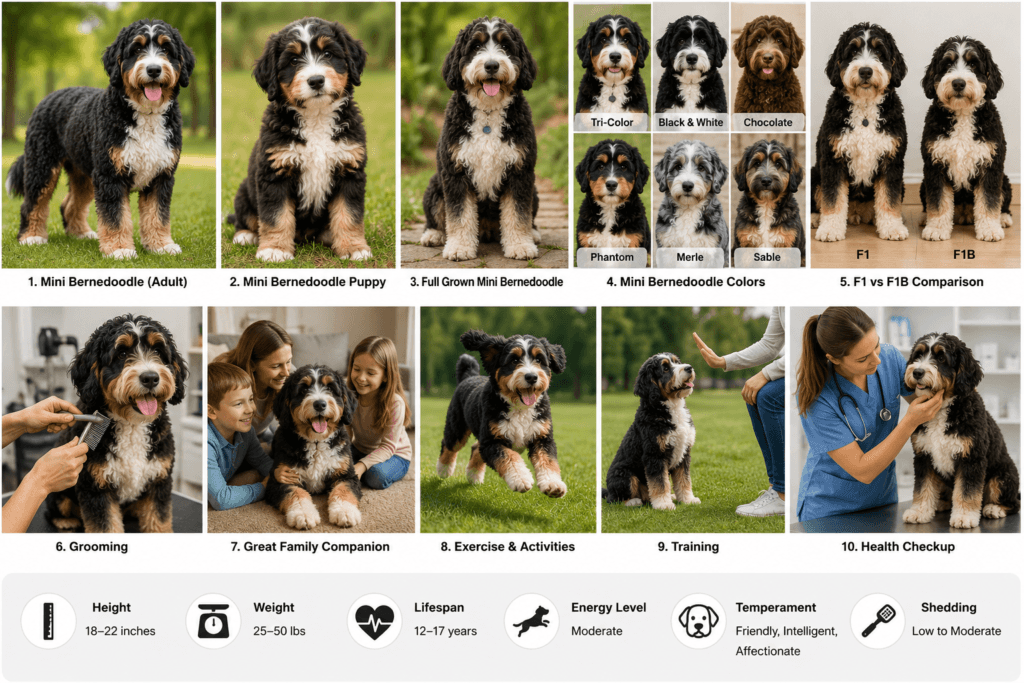
Mini Bernedoodles are recognized by the variety of unique and attractive coat colors they have.
Tri-Color
As you would expect from the name, tri-color mini bernedoodles will have the same coloring as traditional bernedoodles; a combination of black, white and rust (red) coloring just like the Bernese mountain dog.
Black & White
This is one of the most recognizable styles and features an almost “tuxedo” style coat with black and white coloring. They are still very popular with many breeders because of this classic look.
Chocolate
Chocolate mini bernedoodles are known for having a rich brown coat which can range in color from a light Cocoa to deep Dark Chocolate.
Phantom
Phantom mini bernedoodles will be born with tan markings over the eyes, on the legs and around the chest. This gives them an interesting look.
Merle
Merle mini bernedoodles are characterized by their mottled or marbled looking coat. The Merle mini bernedoodle has a mixture of light and dark colored areas all through out its coat.
Mini Bernedoodle Feeding Guide
Proper nutrition plays a major role in your dog’s health and development.
| Age | Meals Per Day |
|---|---|
| 8-12 Weeks | 4 Meals |
| 3-6 Months | 3 Meals |
| 6-12 Months | 2-3 Meals |
| Adult | 2 Meals |
Choose a high-quality dog food formulated for your dog’s age, size, and activity level. Fresh water should always be available.
Mini Bernedoodle Training Timeline
Mini Bernedoodles are intelligent dogs that respond well to positive reinforcement training.
8-10 Weeks
- Crate training
- Potty training
- Name recognition
10-12 Weeks
- Basic socialization
- Handling exercises
- Introduction to leash walking
3-6 Months
- Sit
- Stay
- Come
- Loose-leash walking
6-12 Months
- Advanced obedience
- Impulse control
- Continued socialization
12+ Months
- Agility
- Therapy dog training
- Advanced commands
Mini Bernedoodle Pros and Cons
| Pros | Cons |
|---|---|
| Friendly and affectionate | Can be expensive |
| Great family companion | Requires frequent grooming |
| Highly intelligent | May develop separation anxiety |
| Low-shedding coat | Needs regular exercise |
| Generally good with children | Coat maintenance can be time-consuming |
Choosing a Breeder for a Mini Bernedoodle
Selecting a breeder to acquire your mini Bernedoodle is very important. The selection process can influence the temperament and behavior of your new pet as well as its overall health.
First, you will want to research reputable local breeders specializing in Doodles (or specifically Bernedoodles). Check the online reviews and testimonials of other customers to see what their experiences have been.
If feasible, visit the breeder’s kennel or facility. A reputable breeder maintains clean surroundings and provides adequate care for their breeding stock as well as socialization opportunities. Observe how the Bernedoodle puppies interact with people as well as with other pets.
Inquire as to whether there have been any health screening performed on the parents; particularly any genetic testing which may be applicable to Bernese Mountain Dogs and Poodles. Reputable breeders should be able to provide copies of these test results.
Your intuition plays an important role in this process. Trust your feelings. If anything seems “off” at the time of your interaction, it may be worth your while to continue searching for another breeder who places value in ethics and the welfare of the puppy being produced.
Tips for Introducing Your Mini Bernedoodle to Your Home
Welcome to your home with your new Mini Bernedoodle! Make an area that is safe and comfortable for your new dog to relax in. An area with a comfortable bed in a quiet area will be very helpful.
When bringing your new dog home, introduce him/her to one area at a time and allow your dog to sniff around and get used to the area.
Before you bring your new dog home, it would be best to purchase all of the necessary items such as food and water dishes, toys and pet grooming supplies. These will assist with your new dogs comfort level and help him/her to become acclimated to his/her new home.
Be patient with your new dog during the introduction to family members and other pets. It is best to keep the first encounters between your dog and others calm and gentle and avoid overwhelming your new dog with too many family members and/or pets.
It is best to establish regular feeding and potty breaks immediately after bringing your new dog home. Establishing a routine for these activities will greatly assist your new dog in becoming accustomed to his/her new home.
Give your dog a lot of encouragement and positive reinforcement while he/she is adjusting to his/her new environment. This will provide a pleasant experience for both you and your new dog.
Conclusion
This fun journey begins by selecting a Mini Bernedoodle. Bringing so much love into homes whether as a family pet or companion to an individual.
Mini Bernedoodles have great personalities and are quite playful therefore make perfect pets. Whether you live in a big house, small apartment or anywhere in between, mini bernedoodles are easy to adapt to whatever lifestyle you choose.
Before you select a Mini Bernedoodle, consider all the responsibility associated with owning one. Grooming needs and exercise requirements need to be considered when choosing how to best take care of your new mini bernedoodle.
In addition to finding a good breeder that provides a healthy puppy, and proper breeding, socialization, and training of your new pup will provide an excellent foundation for a strong bond with your new fur baby.
By taking the time to learn about the needs of your mini bernedoodle you will see rewards from your investment in the long run. Your new fur baby has become a member of the family.
FAQs
Are Mini Bernedoodles Hypoallergenic?
No dog is truly “hypoallergenic”, however Mini Bernedoodles tend to be an allergy-friendlier breed due to lower amounts of dander (sheds) compared to many other breeds.
Do Mini Bernedoodles Shed?
For the most part, most mini Bernedoodles will experience minimal shedding, this includes both F1B and multigenerational mini Bernedoodles. Although there could be some variation depending upon individual characteristics.
Are Mini Bernedoodles Good Family Dogs?
Yes. They have the temperament to be an excellent companion for families. This is based on their friendly loving personalities along with their high level of intelligence and gentle natures.
Do Mini Bernedoodles Bark A Lot?
In general, Mini Bernedoodles do not bark excessively, however they may bark to alert you to someone at the door or noise that it has never heard before.
Can Mini Bernedoodles Be Left Alone?
While many adult Mini Bernedoodles can tolerate being home alone for a couple of hours, they also greatly benefit from companionship and possible developing separation anxiety if left by themselves too much.
How Long Do Mini Bernedoodles Live?
When properly cared for, fed well, receive adequate veterinary care; the average life span of a Mini Bernedoodle will range from 12 to 17 years.
Are Mini Bernedoodles Easy To Train?
Absolutely. Both the intelligence and eagerness to please of the Mini Bernedoodle makes them extremely trainable. Using positive reinforcement training techniques produces even better results.
What Is the Rarest Mini Bernedoodle Color?
Generally speaking Merle is considered one of the least common and most desirable colors/patterns for a Mini Bernedoodle.