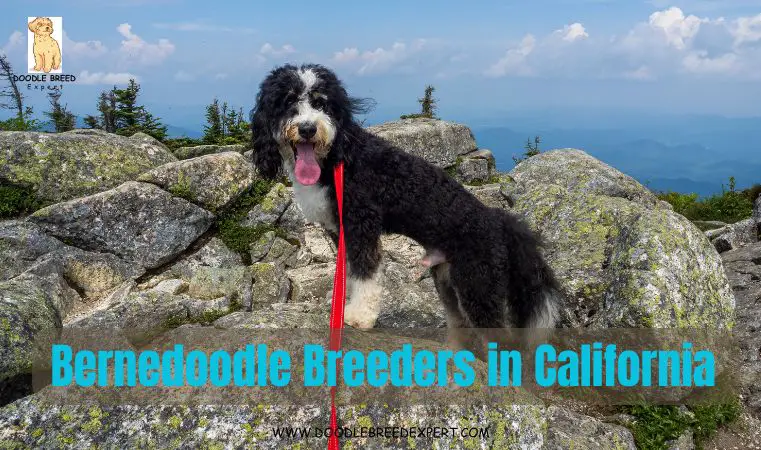
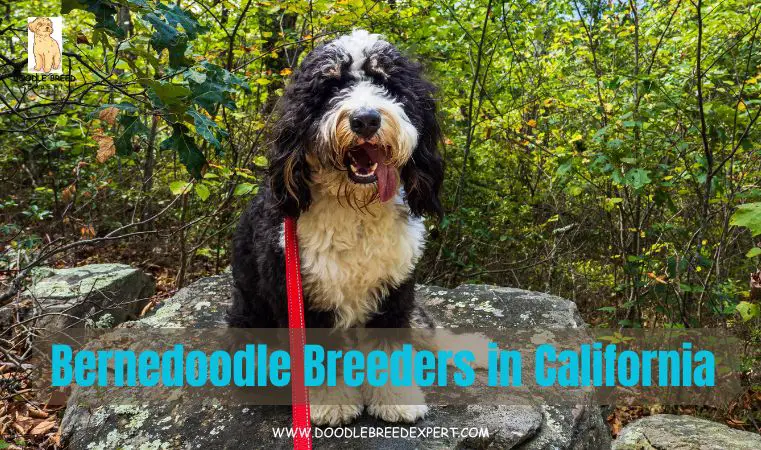
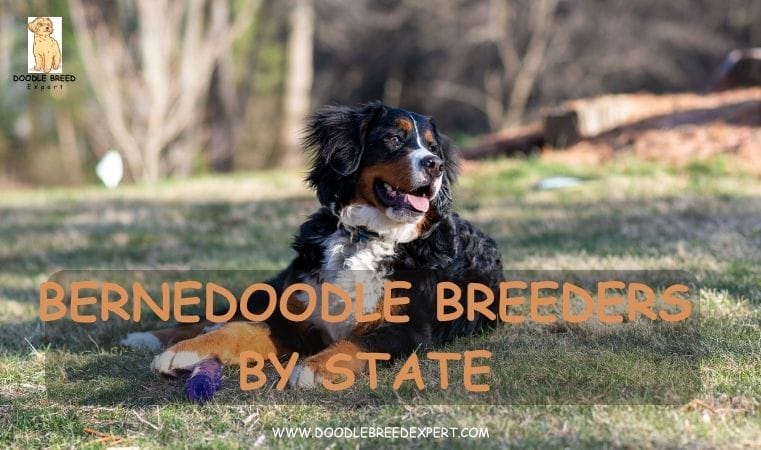
Most people see a Bernedoodle as a classic tricolor (black coat, with rust markings, and white blaze, and white chest), much like that of a Bernese Mountain Dog. Phantom Bernedoodles have the same rust or tan points on their head, chest, and legs as do all tricolored Bernedoodles; however, they will typically lack almost all white. As a result, they are very sleek and visually appealing, and have recently been gaining popularity among many owners – particularly those who own smaller, Miniature Bernedoodles.
This information will explain what a phantom Bernedoodle is; how it is different than a tricolor; the genetic code that leads to its existence; and things you should inquire of your breeder when you are looking at obtaining a phantom.
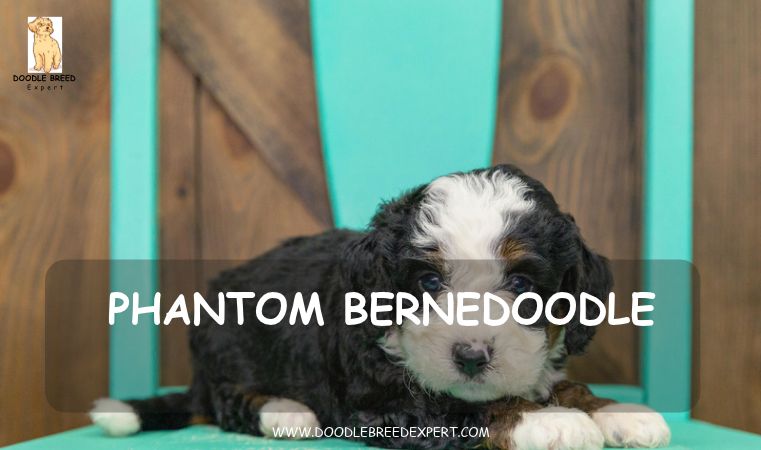
What Is a Phantom Bernedoodle?
A phantom Bernedoodle has two colors:
- A dark base coat, usually black, sometimes chocolate (brown)
- Tan, rust or cream points above the eyes, on the muzzle and cheeks, on the chest, on the lower legs and under the tail
A small white spot on the chest or toes is common, but a phantom doesn’t have the big white blaze, collar and chest of a tricolor. Once there’s a lot of white, the dog is usually called a tri.
Phantom vs Tricolor Bernedoodle
| Feature | Phantom Bernedoodle | Tricolor Bernedoodle |
|---|---|---|
| Colors | Two: dark base + tan points | Three: dark base + tan points + white |
| White | None or a small spot | Blaze, chest, feet and often tail tip |
| Look | Doberman- or Rottweiler-style markings | Classic Bernese look |
| Main genetic difference | Lacks most white spotting | Carries white spotting genes |
The Genetics of a Phantom Bernedoodle
Tan point genetics of Phantom Poodles and Bernese Mountain Dogs is due to inheritance of an at (tan points) gene located at the A locus. Below are the primary genetic loci involved with this inherited trait.
K locus
To reveal tan points, a dog will need to be homozygous for the ky gene (ky/ky), while one copy of dominant Black (KB) hides the pattern by producing a solid Black or Brown coat. Many Poodles carry KB, which is why many F1 Bernedoodle puppies are solid or nearly all Black.
A locus
The Bernese Mountain Dog is at/at. As long as the Poodle passes on an “at” then the puppy will be at/at, and could possibly show points.
S locus (white spotting)
A Bernese Mountain Dog’s white spots are due to spotting genes. They have a type of white spotting that produces a blaze & chest, but many phantom Bernedoodles either inherit very little or none at all of this white spotting; therefore, they will continue to be two-colored.
B locus (chocolate)
Two “brown” alleles (b/b) turn black pigment brown, creating a chocolate phantom coat color with a brown nose.
A phantom Bernedoodle will need a combination of the K and A genes from each parent and minimal white spotting. This is why phantom Bernedoodles are often produced by breeders who have used phantom Poodles or multi generation bernedoodle lines.
Mini Phantom Bernedoodles
The mini phantom Bernedoodle is among the most sought after of all Bernedoodle sizes. With that said; most mini Bernedoodles result from a cross between a Bernese Mountain Dog and a Miniature poodle, or through first generation backcrosses (F1Bs) and multigeneration breeding programs using Miniature bloodlines. For those breeders specifically interested in creating phantom miniatures, they normally utilize either phantom Miniature poodles as the stud, or phantom bernedoodle sires.
Minis typically weigh 20 to 45 pounds, depending on generation and parents. Color doesn’t change size, and a phantom mini will grow just like any other mini of the same parentage. For more on size and temperament, see our mini Bernedoodle guide.
Do Phantom Bernedoodles Change Color?
The points are usually present at birth and remain in the same location. Color may however, shift as they age.
- Graying or fading. Some Poodle lines carry the progressive graying gene, which can turn a black phantom silvery or a chocolate phantom pale over a few years.
- Point color. Tan points may lighten toward cream or deepen toward rust as the adult coat comes in.
- Grooming. Short haircuts can make points look less defined.
If you want the color to stay dark, ask whether the parents have been DNA tested for the graying gene.
Is the Phantom Color Linked to Health Problems?
No. The phantom pattern is not linked to disease. A phantom Bernedoodle has the same health profile as any other Bernedoodle, including risks of hip and elbow dysplasia and some Bernese-linked cancers. Health testing of the parents matters far more than color.
Beware Merle combination puppies such as “Merle phantom.” Single copy of Merle is okay but breeding two Merle dogs will produce double merles which are at high risk for deafness and blindness.
How to Choose a Phantom Bernedoodle Puppy
- Ask for health testing on both parents: hips, elbows, eyes, heart, and genetic screens such as degenerative myelopathy and von Willebrand disease.
- Ask for color genetics. Breeders who promise phantoms should be able to show K, A and S locus results.
- See adult photos from previous litters so you know how the coat and points mature.
- Don’t pay more for color than for health. A phantom premium is common, but a well-raised, health-tested puppy is what really matters.
Our Bernedoodle breeders directory can help you start your search.
Grooming a Phantom Bernedoodle
Grooming needs depend on coat type, not color. Wavy and curly Bernedoodles need brushing every day or two and a professional groom every 6 to 8 weeks. Keeping the coat on the face and legs a bit longer helps the points stand out.
Frequently Asked Questions
What is a phantom Bernedoodle?
It is a Black/Chocolate Bernedoodle. The tan/rust points are located at the eyebrows, muzzle, chest and legs. There is very little to NO White.
What’s the difference between a phantom and a tricolor Bernedoodle?
A tricolor is marked by the presence of both tan points as well as white markings on the head, chest, and legs. A phantom will have only two colors.
Are phantom Bernedoodles rare?
There are fewer of these dogs as compared to tricolored ones because they need specific genes from both parents and very little white spotting.
Are mini phantom Bernedoodles available?
Yes. Some breeders use the Phantom Miniature Poodle or the Phantom Bernedoodle as parents when they want to produce “mini phantoms.”
Do phantom Bernedoodles fade?
Some dogs may inherit the Poodle graying gene; a genetic testing of their DNA will indicate if the dog has inherited it.
Final Thoughts
A Phantom Bernedoodle offers all the rich coloring of a Bernese with no white to spoil the look; they are available in either Standard or Miniature size. Look for a reputable breeder who understands the genetics behind this color pattern and tests each of her breeding parents for health issues before she breeds them. She should be able to give you photos of her adult dogs from previous litters.