
A Merle Sheepadoodle is difficult to overlook. Rather than having a typical black-and-white “panda” appearance, they display a mottled coat where dark areas are randomly placed across an otherwise light-colored dilute background; in addition, many have at least one (and sometimes two) blue eyes. The mottling pattern of this dog is quite visually appealing and comes with the responsibility for understanding genetics that all buyers need to comprehend.
As a veterinarian, I am pleased to see that a well bred merle Sheepadoodle is possible. However, I am disappointed by breeders who do not understand how merle’s work since it has the potential for producing puppies with lifelong vision loss and/or hearing impairments. The goal of this article is to provide information on the genetic process of merle in dogs; the different colors associated with the merle gene; the health issues associated with breeding two merles together; and some questions you should be asking your breeder or pet store prior to buying a puppy.
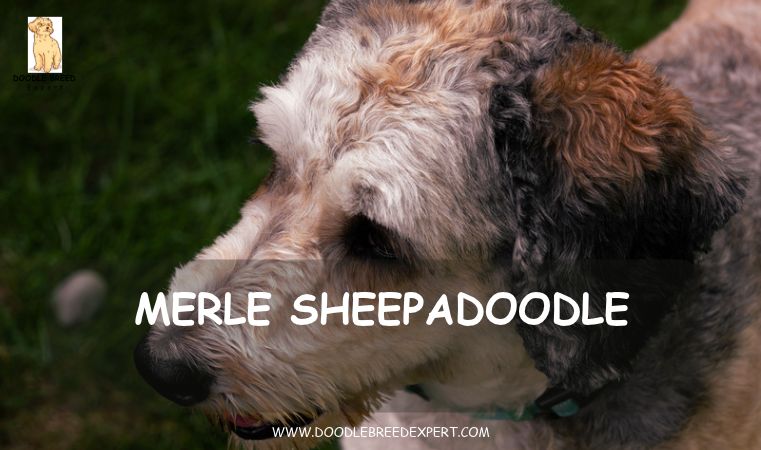
What Is a Merle Sheepadoodle?
A Sheepadoodle is a cross between an Old English Sheepdog and a Poodle. Merle Sheepadoodles will be born as carriers of the merle gene (which can randomly dilute sections of color in the dog’s coat), and therefore have patches of color in their coats. The non-diluted areas stay dark, resulting in the mottled or marbled effect.
Common merle Sheepadoodle colors include:
- Blue merle: black patches on a gray-blue base, often with white
- Chocolate (red) merle: dark brown patches on a lighter tan or beige base
- Merle with white: merle patches combined with the white face, chest and legs typical of Sheepadoodles
- Merle phantom or tri: merle plus tan points, sometimes with white
Where Does Merle Come From in Sheepadoodles?
This surprises many people. The gray-and-white coat of an Old English Sheepdog is not merle; it’s a different color pattern. Purebred Poodles also aren’t traditionally merle, and Poodle breed clubs don’t accept merle as a standard color. In Sheepadoodles, merle usually comes from a merle Poodle or a merle doodle parent in the breeding line.
A merle isn’t a “bad” dog; just because your dog is a merle Sheepadoodle means you should find out where the merle came from and what management techniques the breeder uses for it.
How Merle Genetics Work
The merle gene (M locus) has two main forms: merle (M) and non-merle (m).
- m/m: no merle; normal solid or patterned coat
- M/m (single merle): the classic merle pattern; generally healthy
- M/M (double merle): often mostly white, with a high risk of deafness and eye defects
In addition to these common types of merle there are other merle patterns, including harlequin-type merle and many others with varying length. Because some dogs that appear to be non-merle can actually carry the hidden gene it is critical that all potential parents be tested using DNA testing.
Why double merle is a serious problem
On average, approximately one in four puppies will be a double merle when two merle dogs are bred. The most common health issues associated with double merle dogs include:
- Partial or complete deafness in one or both ears
- Small or malformed eyes (microphthalmia), vision loss or blindness
- Excess white coat, especially on the head
These issues cannot be resolved; they last a lifetime. Irresponsible breeders often crossbreed merles together. Responsible breeders will mate one merle dog to a dog of another color (not merle), then DNA test each parent as well as their offspring, specifically testing for “cryptic merle”.
Do Merle Sheepadoodles Have Blue Eyes?
Some dogs can. Merle dogs can also reduce the amount of pigment in the iris which can give you either one blue eye, both blue eyes, or eyes with small flecks of blue. Blue eyes in a single merle dog rarely affect a dog’s ability to see. The chances of having eye issues increase greatly if there is a second merle gene (double merle) therefore; all merle puppies need an eye exam.
Other Health Considerations
Aside from merle itself, a Merle Sheepadoodle is at risk for all the same health issues as any other Sheepadoodle.
- Hip and elbow dysplasia from both large parent breeds
- Bloat in standard-size dogs
- Eye diseases such as progressive retinal atrophy and cataracts
- MDR1 drug sensitivity, which can occur in Old English Sheepdogs and herding breeds and affects how dogs respond to certain medications
- Hypothyroidism and Addison’s disease
- Skin and ear problems in dense, hairy coats
Have your breeder test both of your dogs’ parents for the MDR1 gene mutation. Tell your vet if your dog is a carrier (has one copy) so he/she can select safe medication choices for you and your pet.
Do Merle Sheepadoodles Change Color?
Yes, quite often. The Fading/Graying gene can be carried by both the Poodle side of the Sheepadoodle and the Old English Sheepdog side of the Sheepadoodle. Therefore, a Dark Blue Merle Puppy can fade to a lighter Silver Merle color and lose some of the dramatic patch contrast as it develops its adult coat, which usually takes place between 6-18 months.
Questions to Ask a Merle Sheepadoodle Breeder
- Are both parents DNA tested at the M locus, including for cryptic merle?
- Is only one parent merle? (The answer should be yes.)
- Have the parents had hip, elbow and eye evaluations?
- Are the parents tested for MDR1 and other relevant genetic diseases?
- Have the puppies had a hearing check or a BAER test if they have a lot of white?
- Can I see adult dogs from previous litters?
If you don’t get clear answers — move on. A high price for merles does NOT mean they have superior bloodlines.
Grooming a Merle Sheepadoodle
Sheepadoodles usually have thick, wavy to curly coats that need brushing several times a week and professional grooming every 6 to 8 weeks. Merle doesn’t change grooming needs. Keep a slightly longer coat if you want the marbled pattern to show; very short clips reveal more of the lighter undercoat.
As dogs have large amounts of white or light-colored areas around their eyes and noses they will likely burn more easily when exposed to direct sunlight, especially during the middle part of the day in warmer seasons.
Is a Merle Sheepadoodle Right for You?
A merle Sheepadoodle can be a good, healthy companion if you like their appearance and are able to locate a responsible breeder (one that has tested for genetic disorders) and does not produce merles by breeding two merles together. Merle Sheepadoodles have the same temperament as all other Sheepadoodles. They will often display playful personalities, be very affectionate and sometimes appear a bit “clownish.” Merle Sheepadoodles also require lots of family time and exercise.
If you’re also comparing herding doodle colors, our guides to the blue merle Aussiedoodle and red merle Aussiedoodle explain merle in another popular cross.
Frequently Asked Questions
What is a merle Sheepadoodle?
It is a Sheepadoodle with the merle gene; this will create an effect where there are dark patches within a marbled coat on a light or pale-colored, dilute base.
Are merle Sheepadoodles healthy?
Generally single merle Sheepadoodles have good health. The serious risks come from double merles, produced when two merle dogs are bred together.
Do merle Sheepadoodles have blue eyes?
Some have one or two blue eyes or blue flecks. In single merles, this usually doesn’t affect vision.
Do merle Sheepadoodles fade?
Many lighten as the adult coat grows in, often softening from a deep blue merle to a lighter colored (or “silver”) merle.
Why are merle Sheepadoodles more expensive?
Many breeders raise prices simply because this coat type is both trendy, and relatively rare. That being said, just because something costs money does not mean it has been bred responsibly. Always research the breeder’s use of DNA and Health testing.
Final Thoughts
A Merle Sheepadoodle is an attractive and a healthy family pet if it comes from a single merle parent and a responsible breeder who does their testing. To find out about your potential new pet, first learn some basic Merle genetics and secondly have a conversation with your breeder (don’t let them get away without one), thirdly walk away from a breeder who thinks they should breed two Merle dogs. The fate of your future pets’ eyes and ears will rely on you making this decision.