Disclosure: As an Amazon Associate, Doodle Breed Expert earns from qualifying purchases. This doesn’t change the price you pay.
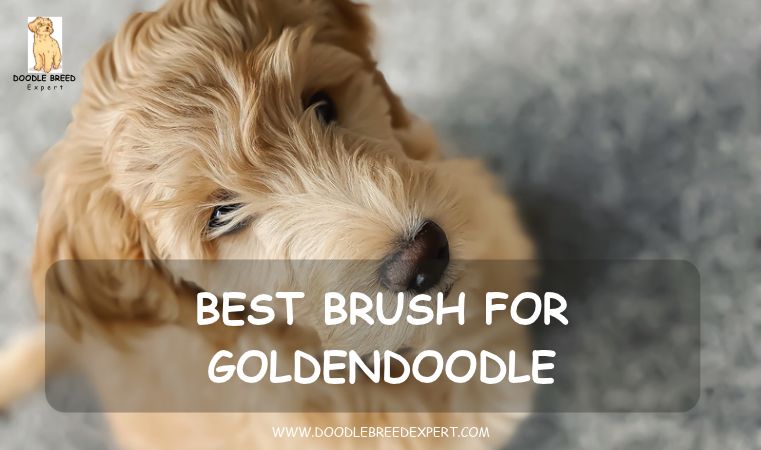
If you took your Goldendoodle to be groomed and he came back shaved down to the skin, the issue was probably the brush, not the groomer. That’s why choosing the best brush for a Goldendoodle matters more than most owners think. Mats develop very near the skin, and if they form under a coat that looks fine when viewed from above, there is normally no nice way to remove them.
To avoid matting problems and properly care for the skin beneath your Goldendoodle’s coat, you need the right tools and an established routine. Below are the brushes and combs I would include in a basic Goldendoodle grooming kit, what types of coats each one works well with, and one common item listed by many “best brush” reviews that I do not believe belongs on a doodle coat.
Short answer: Most Goldendoodles can be successfully maintained using a long-pin slicker brush (the Chris Christensen Big K is the industry standard), combined with a stainless steel comb (Andis 65730). The slicker brush is designed to work through the coat, while the comb provides proof that there are no tangles all the way down to the skin. If you were going to purchase just two items for your Goldendoodle, those two would be the slicker brush and the comb.
Our Top Picks at a Glance
| Product | Best For | Coat Type | Price Range |
|---|---|---|---|
| Chris Christensen Big K Slicker Brush | Best overall | Wavy, curly | $$$ |
| Andis 65730 Stainless Steel Comb | Best comb | All coats | $ |
| Chris Christensen 27mm Oval Pin Brush | Finishing and fluff | Flat, wavy | $$$ |
| Swihauk Self-Cleaning Slicker Brush | Best budget slicker | Flat, short cuts | $ |
| Poodle Pet Dematting Fur Rake | Small mats | All coats | $ |
| Chris Christensen Face and Feet Butter Comb | Face and paws | All coats | $$ |
| Warren London Gentle Touch Slicker Brush | Puppies | Puppy coat | $ |
| Safari Soft Slicker Brush | Sensitive skin | All coats | $ |
Why Goldendoodle Coats Need Different Brushes
A Goldendoodle’s coat depends on whether its Poodle genes or its Golden Retriever genes won out, and that can vary a lot among puppies born in a single litter. Breeders typically classify coats into three categories:
- Flat or straight coat: more Golden-like, sheds more, and tangles less. Common in F1 puppies.
- Wavy or shaggy coat: the classic teddy-bear look. A mix of both parents, and the coat most owners have.
- Curly coat: tight Poodle-type curls, low shedding, and the most prone to matting. Common in F1B and multigen dogs.
(If you’re not sure which generation your dog is, our guide to Goldendoodle generations explains how F1, F1B, and multigen crosses affect the coat.)
Most of what matters about brushes comes down to shedding. Low-shedding dogs don’t drop hair onto the floor because the dead hair gets caught within the coat, wrapped around the live hair. And this is where matting occurs. So the curlier and lower-shedding your doodle is, the more work the brush has to do. A soft-bristled brush that simply slides across the surface of a curly coat accomplishes very little. To get down to the skin, you need pins.
The 8 Best Brushes and Combs for Goldendoodles
1. Chris Christensen Big K Slicker Brush — Best Overall
Chris Christensen Big K Slicker Brush
This type of brush is what you’ll typically see in professional doodle grooming kits. The pins are long and angled, which allows them to penetrate through a thick wavy or curly coat. And since the pad has some flex when used with a gentle touch, it won’t scrape against your doodle’s skin.
There are various size options available. Owners of standard or medium Goldendoodles usually buy the Large. Mini doodles do fine with the Small (sold as the Baby K) for their face and legs.
It isn’t inexpensive. However, it is made by hand in Germany and will last for many years. Cheap slicker brushes with short, stiff pins are one of the reasons owners believe they’re brushing when they actually aren’t.
Best for: wavy and curly coats, daily line brushing
Pros: long pins reach the skin; flexible pad; very durable
Cons: premium price; you need a light touch while you learn
2. Andis 65730 Stainless Steel Comb — Best Comb (Don’t Skip This)
Andis 65730 Stainless Steel Comb
A slicker brush makes your dog’s coat look smooth. A comb is the best way to know if it really is. Once you’ve finished brushing, gently move the comb through the hair from the skin out. When it moves smoothly through the hair, you’re done. If it gets caught, there’s a knot you missed.
The Andis comb has wide teeth on one side and fine teeth on the other. It weighs very little and costs around $15, which likely makes it the least expensive item on this list that will help you avoid a shave-down. Many top-ranking brush lists leave out a proper steel comb, and I think that’s a big omission, since the comb test is the method most professional groomers use to check their own work.
Best for: checking for hidden tangles after brushing
Pros: inexpensive; two tooth spacings; well made
Cons: won’t remove mats on its own
3. Chris Christensen 27mm Oval Pin Brush — Best for Finishing and Fluff
Chris Christensen 27mm Oval Pin Brush
Pin brushes are milder than slicker brushes and are best used to finish a coat that doesn’t have many tangles. If your flat-coated or wavy Goldendoodle is brushed often, a pin brush can handle much of the day-to-day grooming. On curly-coated dogs, use the pin brush after the slicker, not instead of it.
Best for: flat and wavy coats, finishing after a bath
Pros: very gentle on skin; great for fluff-drying
Cons: won’t break up tangles in curly coats
4. Swihauk Self-Cleaning Slicker Brush — Best Budget Slicker
Swihauk Self-Cleaning Slicker Brush
If you’re not yet willing to spend money on a Chris Christensen, the Swihauk is an affordable slicker brush. It also has thousands of customer reviews, which tell you a lot about how it holds up. Cleaning it is simple thanks to the button that retracts the pins.
The pins on this slicker aren’t as long as those on the Big K. So while it may not reach the skin as easily on longer curls, it’s a good fit for puppies, flat-coated Goldendoodles, and owners who keep their doodle in a shorter cut.
Best for: shorter cuts, flat coats, beginners
Pros: affordable; easy to clean
Cons: shorter pins; less effective on long curly coats
5. Poodle Pet Dematting Fur Rake — Best for Small Mats
Poodle Pet Dematting Fur Rake
Small mats under the armpits, around the ears, and at the back of the neck are quite normal on most doodles, even very well-brushed ones. This rake has safety teeth with an inside cutting edge that lets you remove a small mat without using scissors (and scissors are how a lot of dogs end up at the vet with cuts).
When working on a mat, hold the hair at the bottom of the mat and work from the outside toward the center. When a mat is tight to the skin or larger than a quarter, STOP! It’s time to call your groomer.
Best for: small mats in friction areas
Pros: safer than scissors; many owner reviews
Cons: not for large or pelted mats
6. Chris Christensen Face and Feet Butter Comb — Best for the Face
Chris Christensen 5″ Face and Feet Butter Comb
This 5-inch comb is the right size for grooming your dog’s face, beard, eyes, and paws. A large slicker would be too big to use safely here. The area around your dog’s mouth, chin, and lips (the beard) is a prime spot for food, water, and slobber to collect. Combing it regularly, especially after meals, keeps the beard clean.
Best for: face, beard, ears, and feet
Pros: small and precise; smooth teeth
Cons: too small for the body
7. Warren London Gentle Touch Slicker Brush — Best for Puppies
Warren London Gentle Touch Slicker Brush
During the puppy stage, the fur is still soft and doesn’t mat easily. So in the first few months, your main goal is teaching your puppy that getting brushed is normal and comfortable. Use a smaller, softer slicker like this one for short, positive sessions while your puppy is young.
Once your puppy grows into the full adult coat (usually anywhere from 6 to 12 months), switch to a slicker with longer pins. This is typically when doodle owners get surprised by mats in every nook and cranny.
Best for: puppies under about 8 months, small doodles
Pros: soft pins; sized for small dogs
Cons: you’ll outgrow it once the adult coat comes in
8. Safari Soft Slicker Brush — Best for Sensitive Skin
Safari Soft Slicker Brush (Large)
It’s common for some doodles to dislike slickers, and often there’s a reason: the brush scratches. The Safari Soft Slicker has finer pins that are much softer, so they’re less likely to irritate thin skin. Its larger head also covers more coat per stroke. It’s a useful middle step if your doodle won’t sit through a whole session with a stiffer slicker.
Best for: dogs with sensitive skin or brush aversion
Pros: gentle pins; affordable
Cons: less pulling power on thick coats
What to Skip: Deshedding Tools on Doodle Coats
Many lists of “the best brush for Goldendoodles” include deshedding tools like the FURminator, which are designed to remove loose undercoat from heavy-coated breeds such as Labs and Huskies. These tools have a fine blade-like edge, and on doodle hair they tend to cut and break it off at the ends. Many owners also find their Goldendoodle’s skin gets irritated with heavy use. Light, occasional use may work on a flat-coated Goldendoodle with a thick, Lab-like double coat. For almost every other Goldendoodle, including wavy and curly coats, a slicker and comb is the safest and best way to maintain the coat.
How to Brush a Goldendoodle: Line Brushing Step by Step
When groomers line brush, the goal is to make sure they reach the actual skin. It can take time the first couple of times, but after that it becomes second nature for you and your dog.
- Start with a lightly misted coat. Never brush a bone-dry coat hard. A light spray of detangler or water helps the brush glide and cuts down on breakage.
- Start at the bottom. Begin at a back leg, near the paw.
- Part the coat. With one hand, push the hair up so you can see a line of skin.
- Brush down from the part. With the slicker, brush small sections down and away from the part, from the skin outward. Use short, light strokes and let the pins do the work.
- Move the part up. Move up about half an inch, make a new part, and repeat. Work up each leg, then the body, chest, and neck.
- Comb test. Run the steel comb through each section from the skin. Anything it catches gets more brushing.
- Check the hot spots. Behind the ears, the armpits, the collar line, the groin, and the tail base mat first.
Common mistake: Brushing too hard with a slicker. Press too hard and you can cause “brush burn,” which is redness and irritation on the skin. If your dog reacts when you brush, or you see redness appear, you need to stop pressing down so hard.
How Often Should You Brush a Goldendoodle?
| Coat and cut | How often to brush | Main tools |
|---|---|---|
| Curly coat, full length | Daily | Long-pin slicker + steel comb |
| Wavy coat, full length | Daily or every other day | Long-pin slicker + steel comb |
| Flat or straight coat | 2–3 times a week | Pin brush or slicker + comb |
| Any coat in a short “puppy cut” | 2–3 times a week | Slicker + comb |
| Puppy coat (under ~6 months) | Short daily sessions | Soft puppy slicker |
After each bath, dry and fully brush your Goldendoodle’s coat. A wet doodle coat left to air-dry can quickly curl up into knots, and this is one of the main reasons we see dogs come in with mats.
A Vet’s Note on Mats and Skin Health
Matting isn’t merely cosmetic. Each time your dog moves, a tight mat pulls at the skin underneath. And because a mat holds moisture, dirt, and heat against the skin, we often find red irritation, hot spots, infection, and/or parasites when we shave them out.
If you find a mat pulled tight to the skin, the better option is usually to let the groomer remove it. If the skin underneath is red, oozing, or smelly, or your dog is excessively licking or scratching the area, please see your veterinarian.
The ears need their own special attention. Goldendoodles grow hair inside the ear canal, and combined with floppy ears that trap moisture, that leads to a lot of ear infections. As you brush, gently lift the ears and give them a sniff. Any yeasty odor, redness, or dark discharge is worth a trip to the vet.
How to Choose the Right Brush for Your Goldendoodle
- Match the brush to the coat. Curly coats need a long-pin slicker. Flat coats can manage with a pin brush and the occasional slicker pass.
- Match the size to the dog. A large slicker on a standard doodle saves time. A small one is easier on minis, faces, and legs.
- Look at pin length. Longer pins reach the skin in a full coat. Short pins are fine for short haircuts.
- Think about your hands. You’ll be brushing a lot. A comfortable, non-slip handle matters more than it sounds.
- Always buy a comb. Whatever brush you choose, a steel comb is what tells you whether it worked.
For bath time, our guide to the best shampoo for Aussiedoodles covers the gentle, low-residue formulas that work on doodle coats in general. If you have an Aussiedoodle too, see the best brush for Aussiedoodles.
Frequently Asked Questions
What kind of brush is best for a Goldendoodle?
A long-pin slicker brush is generally the best tool for most Goldendoodles, along with a stainless steel comb. The slicker breaks up tangles down to the skin and helps prevent mats. The comb lets you make sure you didn’t miss anything.
Can I use a FURminator on my Goldendoodle?
It’s generally a bad idea. Deshedding tools are designed specifically for double-coated dogs, and they can damage wavy or curly doodle coats. A flat-coated Goldendoodle that sheds heavily might handle some limited, light use.
How often should I brush my Goldendoodle?
Most Goldendoodles in a full coat need brushing daily or every other day. Those with a short cut can usually get by with brushing 2 to 3 times per week.
Why does my Goldendoodle keep getting matted even though I brush?
Typically the brush isn’t going through to the skin. The top layer of the coat looks nice because it’s been brushed smooth, but mats keep forming underneath. Do line brushing, then a comb test once you’ve finished.
When should I start brushing my Goldendoodle puppy?
As soon as possible after you bring the puppy home. Use a soft brush for short (under a minute), positive sessions with treats. The goal is to get your puppy used to being handled before the adult coat develops.
Should I brush my Goldendoodle wet or dry?
For best results, brush when the coat is slightly damp, never completely soaked or completely dry. A small amount of detangler helps prevent breakage. If you’re brushing right after a bath, brush while you blow-dry.
Do Goldendoodles need a professional groomer?
Most Goldendoodles should get a professional groom about every 6 to 8 weeks, no matter how well you brush at home. Regular brushing in between helps keep your groomer from having to give your Goldendoodle a shave-down.
Final Thoughts
You don’t need a large collection of brushes to own a Goldendoodle. All you really need is the right two or three, along with a regular brushing schedule that reaches the skin. Start with a good long-pin slicker and a steel comb, and add a dematting rake for the spots that mat most. Brush at least every other day, and daily if you can. Stick to this routine, and next time you visit your groomer, you may actually get to choose a style instead of needing a rescue mission.